When a lab reports total THC, it is estimating how much delta-9 THC could be present after THCA is converted into THC. That matters because a product can have little delta-9 THC in its unheated state and still exceed a legal limit once its THCA is counted.
The common total THC lab calculation is:
Total THC = delta-9 THC + (THCA × 0.877)
The 0.877 multiplier accounts for the mass lost when THCA loses carbon dioxide during heating and becomes delta-9 THC. This guide explains the calculation, what a lab result does—and does not—tell you, and why hemp businesses should treat the December 11 US hemp rule deadline as a paperwork and verification issue, not just a testing issue.
What Is the 0.877 THCA Factor?
THCA, or tetrahydrocannabinolic acid, is the acidic precursor to delta-9 THC found in raw cannabis and hemp. When heated, THCA can decarboxylate, meaning it loses a carbon dioxide molecule and converts into delta-9 THC. The resulting THC molecule weighs less than the original THCA molecule.
The 0.877 THCA factor is the conversion factor used to estimate the amount of delta-9 THC that could result from that conversion. In other words, 1 milligram of THCA can theoretically produce about 0.877 milligrams of delta-9 THC.
The delta-9 plus THCA formula
For a basic calculation, a lab or reviewer uses:
- Delta-9 THC: the measured amount of delta-9 THC already present. THCA: the measured amount of THCA. 0.877: the conversion factor applied to THCA.
Example: If a sample measures 0.20% delta-9 THC and 10.00% THCA, the calculation is:
0.20% + (10.00% × 0.877) = 8.97% total THC
The product does not contain 8.97% delta-9 THC in its unheated state. Rather, the result estimates the delta-9 THC content after accounting for the THCA that could convert through decarboxylation.

How Labs Produce a Total THC Result
A lab does more than plug two numbers into a formula. It first needs a representative sample, a validated analytical method, and results reported in units that match the question being asked. Third-party lab testing can provide an independent measurement, but the report is only useful if the sample, method, and units are appropriate.
Collect and identify the sample. The lab or submitting business documents the product, sample identifier, and, where relevant, batch or lot number. Prepare the sample. The lab homogenizes or otherwise prepares it so the portion tested is representative. Unevenly mixed products can produce misleading results. Measure cannabinoids. A validated method, commonly chromatography, separates and quantifies cannabinoids such as delta-9 THC and THCA. Apply the calculation. The lab, regulator, or reviewer applies the relevant formula and reports the result in a specified unit, such as percent by weight or milligrams per serving or container. Review the reporting basis. The reader checks whether the result is on a dry-weight basis, a “as received” basis, or another stated basis—and whether that is the basis required by the applicable rule. Reported item What it tells you What to check Delta-9 THC The measured delta-9 THC concentration in the tested sample Units, moisture basis, method, and reporting limits THCA The measured concentration of the acidic precursor Whether it is included in the stated total THC Total THC Usually delta-9 THC plus THCA adjusted by 0.877 The exact formula and legal basis used Container total The estimated total THC amount in the whole package Net product weight, serving count, and whether the cap applies per containerPercent and Milligrams Are Not Interchangeable
A percentage describes concentration by weight; milligrams describe an absolute amount. To convert a percentage into an amount, the product’s weight matters. For example, a small package and a large package can have the same total THC percentage but very different milligrams of total THC per container.
For a simple weight-based conversion, 1% by weight equals 10 milligrams per gram. So a 5-gram product at 0.1% total THC contains approximately 5 milligrams of total THC: 0.1% × 5 grams × 1,000 milligrams per gram. The applicable rule may prescribe a different measurement basis or a specific way to determine the amount, so businesses should not rely on this arithmetic alone for a compliance decision.
Why the Shift From Delta-9 THC to Total THC Matters
Some compliance discussions focus only on delta-9 THC measured before heating. That can understate a product’s potential THC content when the product contains substantial THCA. A shift from a delta-9-only approach to total THC, including THCA, changes both product screening and documentation: a low delta-9 result by itself may no longer answer the legal question.
This distinction is especially important for hemp flower. Flower can contain appreciable THCA while its measured delta-9 THC remains low before decarboxylation. Under a total-THC standard, the THCA-adjusted result may put that flower above the applicable threshold.
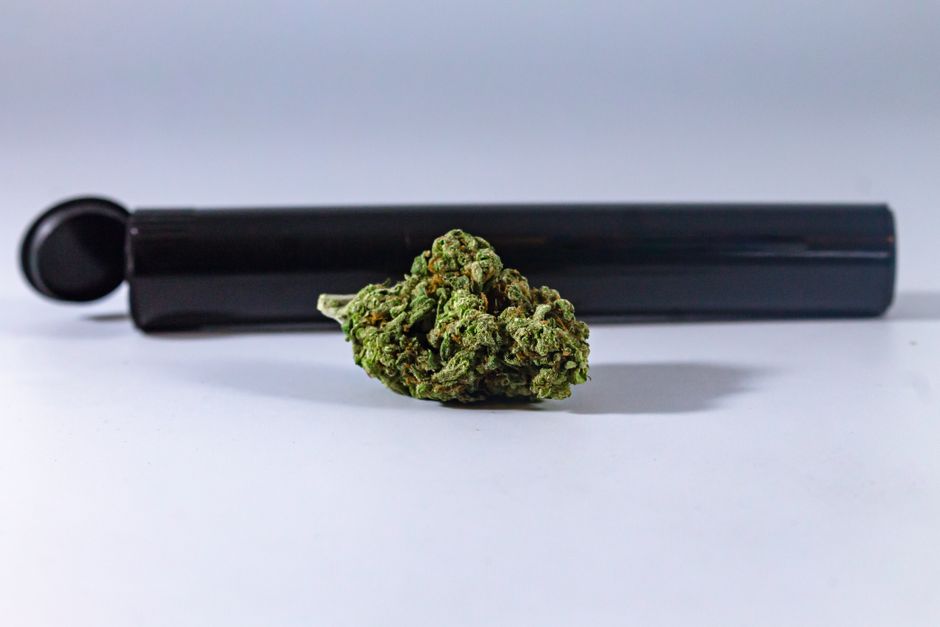
Flower shipments are at the highest risk
Flower shipments deserve particular attention because their cannabinoid profile can make delta-9-only screening a poor predictor of total THC. A shipment may also face practical complications: sampling differences between lots, inconsistent moisture, separate state rules, and questions about which test report corresponds to the material in the package.
- Test representative samples from each relevant batch or lot. Check that the report includes both delta-9 THC and THCA, or clearly states total THC and its calculation. Confirm the sample identifier and batch number match shipping and inventory records. Review destination-state requirements before dispatch; a federal hemp result does not automatically establish compliance everywhere. Keep chain-of-custody and shipping documentation with the lab report.
The 0.4 mg Total THC Per Container Cap
Some proposed or newly enacted hemp-policy frameworks use a 0.4 mg total THC per container cap for certain products. That is a very low absolute-amount threshold, and it is not the same thing as a 0.4% concentration limit. The key details are the exact legal text, which product categories it covers, how “container” is defined, how total THC is measured, and when the provision takes effect.
Businesses should not assume that a cap discussed in a bill, agency announcement, or advocacy summary is already enforceable in the same way in every jurisdiction. Confirm the controlling statute or regulation and any transition period before changing labels, formulations, or shipping practices.
What the December 11 US Hemp Rule Deadline Means for Businesses
The requested “December 11 US hemp rule deadline” should be treated as a date that requires source-checking, not as a universal compliance date that applies to every hemp product and every business. Hemp rules can set different dates for agency action, product transition, state-plan submissions, or implementation. A date in one notice or policy discussion may not be the effective date of a separate federal requirement.
Before relying on December 11, verify joy organics organic CBD gummies the year, the issuing authority, the underlying legal document, and what action is due on that date. Check current USDA (US Department of Agriculture) materials and the relevant statute or regulation; also check state requirements for production, sale, and transport. Industry groups such as the US Hemp Roundtable can help businesses track policy developments, but an advocacy update is not a substitute for the controlling legal text.
One-sentence legal takeaway: The December 11 date matters only if the specific rule or notice governing your product makes it a deadline—confirm the source, scope, and effective date before treating it as law.
How Brands Can Use Lab Results Responsibly
Brands should make lab data easy to trace and hard to misread. For example, Joy Organics and other consumer-facing companies can support transparency by making batch lab results posted online easy to locate and by ensuring that the report corresponds to the product and batch in question. Posting a certificate of analysis is useful, but a generic or outdated report does not prove the contents of a different lot.
- Show the batch or lot number on the product and the matching report. Make the report date, lab name, and sample description visible. State whether the displayed figure is delta-9 THC, THCA, or total THC. Avoid calling a product “THC-free” unless the claim is supported by suitable lab results and complies with applicable labeling rules. Do not present a result below a reporting limit as proof of absolute zero.
Common Calculation and Compliance Mistakes
- Using delta-9 alone: This can omit the THCA contribution when the governing standard is total THC. Adding THCA without adjustment: The usual calculation applies the 0.877 factor rather than simply adding the full THCA value. Confusing concentration with container amount: A percentage cannot establish a milligram-per-container limit without product weight. Ignoring test basis: Dry-weight and as-received figures may differ; confirm which one the rule requires. Assuming one lab report covers every shipment: A report is tied to a sample and should be matched to the relevant batch. Treating a policy summary as binding law: Confirm deadlines and thresholds in the official source.
Bottom Line
The standard delta-9 plus THCA formula is delta-9 THC + (THCA × 0.877). It estimates the THC potential after THCA decarboxylates, which is why a product with low measured delta-9 THC can still have a much higher total THC result. For compliance, verify the lab’s method and reporting basis, convert concentration to container milligrams only when appropriate, and match every report to the product batch. For the December 11 deadline and any 0.4 mg cap, confirm the controlling legal source and effective date before making a market or shipping decision.